As Tyndall enters a pivotal decade for Ireland’s semiconductor ambitions, its newly expanded Executive Leadership Team is steering the Institute toward a bold and globally connected future.
Among the four new leaders shaping Tyndall 2030 is Director of Strategic Development, Professor Giorgos Fagas.
From positioning Tyndall on the global stage to aligning Ireland’s semiconductor ambitions with emerging European and international opportunities, he is driving the new strategy that will define Tyndall’s long‑term trajectory, and Ireland’s role within the rapidly evolving semiconductor ecosystem.
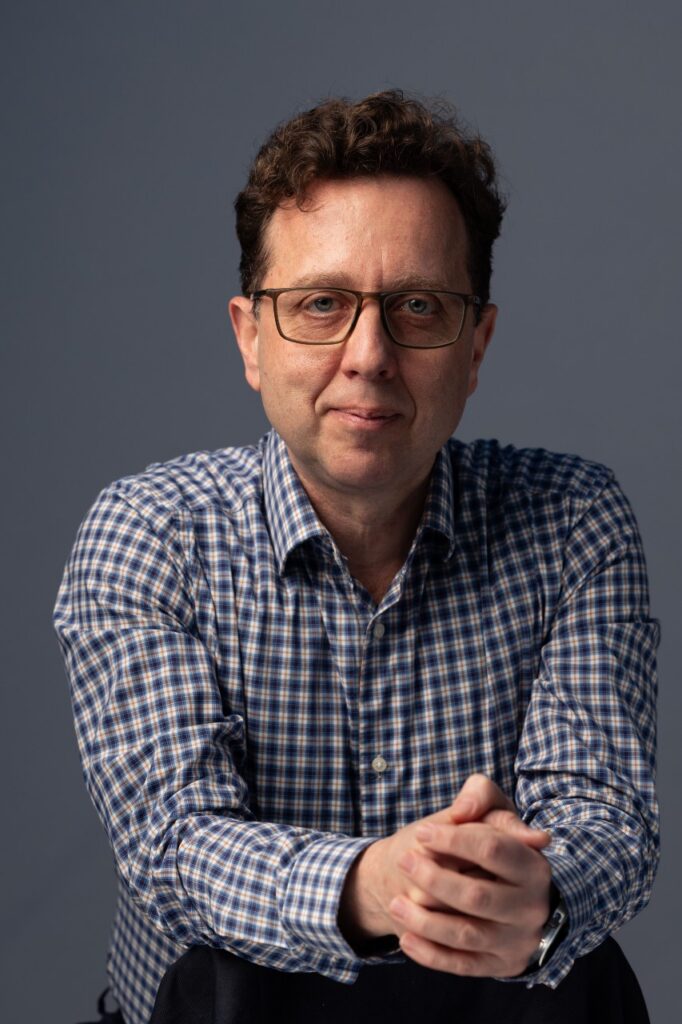
What is your current role?
As Director of Strategic Development at Tyndall, I lead the Institute’s international positioning and drive major, institute-wide strategic initiatives that shape our long-term trajectory. I oversee Tyndall’s integrated strategic planning process and am accountable for delivering our next strategic plan, Tyndall 2030, ensuring it is ambitious, future-focused, and aligned with global opportunities within the semiconductor landscape. A key part of my role is leading systematic horizon scanning to identify emerging technologies and research opportunities that inform strategic choices. Tyndall has a national mandate to act as Ireland’s leading research and innovation platform for delivering the ambitions of Silicon Island, Ireland’s National Semiconductor Strategy and Impact 2030, Ireland’s Research and Innovation Strategy.
In this context, my role focuses on strengthening Tyndall’s leadership on behalf of the State at European and global level, helping shape priorities, partnerships, and programmes rather than simply participating in them. I also provide strategic leadership across key external-facing functions including EU Programmes, Marketing and Communications, and specialist external affairs, to ensure Tyndall’s research leadership translates into visibility, influence, and impact.
What path led you here?
My route into strategic development emerged as my perspective steadily broadened. I began my career rooted in research, trained as a physicist and working in highly interdisciplinary environments across Europe, where I developed a strong appreciation for technical excellence and international collaboration.
After joining Tyndall, a key turning point came when I began leading large, complex research programmes that brought together emerging materials, devices, and architectures at scale. Managing efforts of that scope required more than scientific leadership. It demanded alignment across disciplines, institutions, and time horizons. That was where I became deeply engaged with strategic questions, how individual research activities connect to long-term capability, infrastructure, and national priorities.
Further involvement in European programmes and policy driven initiatives broadened this perspective, exposing me to the full system from discovery through to industrial translation and policy alignment. Over time, this naturally evolved into a strategic development role. What continues to motivate me is the ability to connect people, capabilities, and ideas, so that excellent research is not just done, but deployed where it matters most.
What have been the highlights of your new role to date?
Since stepping into this role, several moments stand out as particularly meaningful and impactful.
One of the most significant highlights has been leading the development of Tyndall 2030. Shaping a bold, future focused strategic plan has allowed me to align Tyndall’s ambitions and those of the State, with global semiconductor trends, sustainability driven research and innovation, and the technologies that will define the next decade.
Another major highlight has been my involvement in establishing the European Pilot Lines that Tyndall participates as Hosting Partner, supported through the EU Chips Joint Undertaking and national investment (via IDA), respectively. Playing a strategic role in positioning Tyndall within this landmark initiative has been hugely rewarding, particularly as it has provided momentum for the next phase of the EU Chips Act and the implementation of Silicon Island.
Seeing ideas, I advocated for several years ago now materialise into national and European initiatives has reinforced the value of strategic leadership, and the potential of Tyndall and Ireland to lead globally in sustainable semiconductor innovation. At a personal level, this has been both exciting and deeply motivating.
What are your priorities for the next stage of Tyndall’s growth?
Looking ahead, my focus is on positioning Tyndall, and Ireland, at the centre of the European and global semiconductor technology ecosystem and skills landscape. A core priority is the rollout and delivery of Tyndall 2030, where I provide strategic oversight across the plan while leading key initiatives such as the development of the National Cleanroom Facility and an Academy for Semiconductor Skills.
A second priority is strengthening Ireland’s international influence by shaping, and fully leveraging, emerging European initiatives such as the next phase of the EU Chips Act. This means ensuring Ireland is an active architect of priorities and programmes, aligned with Silicon Island and Impact 2030, rather than simply a participant.
I am also focused on scaling Tyndall’s global partnerships with industry, research, and policy leaders, and on driving policy-led initiatives that support transformative semiconductor innovation and talent development. Together, these priorities position Tyndall to deliver sustained international impact and long-term competitiveness.
What long‑term impact do you hope to make in your role?
In the long term, I hope to help embed a self-sustaining culture at Tyndall, one where ideas are consistently translated into the technologies of the future, accelerating our ‘lab-to-fab translation’ thinking is embedded across the Institute at every level. Personally, my ambition has been to strengthen our collective ability to move seamlessly from discovery to application to deployment, ensuring that breakthrough research reliably leads to real-world impact.
A key part of the legacy I hope to shape is normalising horizon scanning as a shared embedded practice across the Institute. By cultivating a forward-looking mindset and a unified approach to identifying emerging technologies, capability gaps and global trends, I aim to equip Tyndall with the strategic agility to anticipate change rather than react to it. Ultimately, the impact I hope to leave is an Institute that not only delivers excellent research but consistently positions itself, and Ireland, to shape and lead what comes next in a globally connected semiconductor ecosystem.
Did you have a role model who influenced your career choice?
I’ve been fortunate to work with many people throughout my career who each influenced me in different ways. Rather than one defining mentor, it was exposure to a range of leadership styles and strengths that shaped my approach. Observing how different individuals lead, through for example strategic clarity, people development, problem solving, or creativity, taught me that effective leadership is not one dimensional. Those experiences reinforced a core belief for me. Strong leaders recognise that everyone brings something distinct, and that the real task of leadership is to identify, value, and align those strengths to build resilient teams and successful organisations.
What advice would you give your younger self?
I would tell my younger self that leadership begins with listening, really listening, and with recognising that seeking advice or help is not a sign of uncertainty or weakness, but of intent. I would also stress the importance of judgement over perfection. Learning when to go deep, and when to move forward. Early in a career, it’s tempting to treat everything as equally critical. With experience, you learn that impact comes from focus. The most effective leaders don’t try to perfect everything themselves – they invest their energy where it enables others to succeed. That’s where lasting impact and fulfilment ultimately come from.