


Dr Pádraig Lyons, Head of Group,
Tyndall National Institute
COMMENTARY
Cloud computing and Artificial Intelligence (AI) are reshaping the global economy, but the infrastructure underpinning these new technologies is creating significant challenges in the energy sector. As the requirements of cloud computing and AI continue to expand, the energy infrastructure required to power and cool the data centres that underpin these technologies, is growing at an unprecedented rate.
The Energy Challenge Behind the AI Revolution
Ireland has become a critical hub for cloud computing and associated data centre deployment. Data centres currently consume approximately 23% of Ireland’s metered electricity consumption and is forecast to increase to 30% by 2030. Globally, data centre electricity demand is projected to more than double by 2030, driven largely by AI workloads, while next generation hyperscale facilities are being planned at the at GW scale. A single 1 GW data centre campus would require electricity equivalent to approximately one-fifth of Ireland’s average national demand, or several times the load of a medium-sized city.
The rapid growth of cloud computing and Generative AI is driving unprecedented demand for digital infrastructure, with associated increases in energy consumption and carbon emissions raising concerns about environmental impact.
Why Renewable Energy Alone Is Not Enough
While decarbonising electricity supply to data centres is critical to achieving sustainability goals and combating climate change, renewable energy alone cannot solve the challenge. Existing computing architectures were not designed for the scale and intensity of emerging AI workloads. Reducing the energy required to process, move and manage data is therefore becoming one of the defining technological challenges of the next decade, creating an urgent need for innovation in semiconductors, photonics, power electronics and computing architectures.
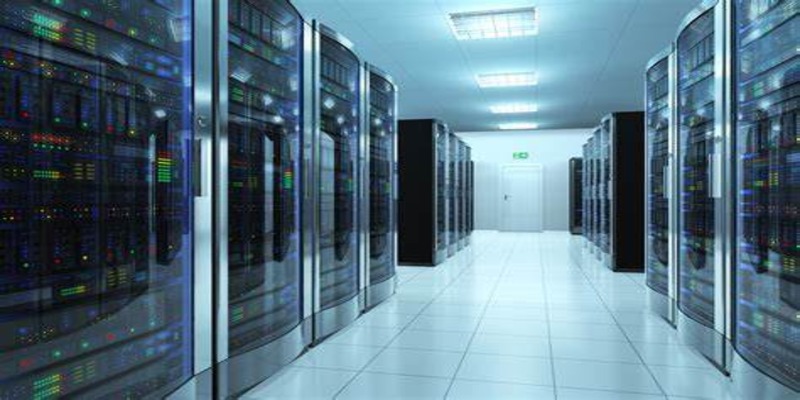
Decarbonising cloud and AI infrastructure requires a coordinated approach that addresses energy supply, system efficiency, thermal management and resource circularity across the entire data centre ecosyst
em. Achieving this transition depends not only on deployment of renewable energy infrastructure, but also on continued research and innovation in the technologies that underpin digital infrastructure.
Four Pillars of Decarbonised Cloud Infrastructure
Key pillars for decarbonised cloud and AI infrastructure:
- Decarbonise electricity supply to data centres by increasing the use of renewable energy through power purchase agreements (PPAs), onsite generation, energy storage and demand flexibility, supported where necessary by other low-carbon energy sources to ensure reliability during peak demand.
- Improve energy efficiency across digital infrastructure through advanced power electronics, DC power distribution, next-generation semiconductors, photonics, intelligent power management and emerging memory technologies that reduce the energy intensity of AI and data processing workloads within data centres
- Deploy innovative cooling and heat reuse solutions such as liquid cooling, free-air cooling and phase-change technologies to reduce cooling energy demand within the data centres while creating opportunities to recover their waste heat for district heating, industrial processes, water treatment and carbon capture applications.
- Embed circular economy principles by extending equipment lifetimes, implementing predictive maintenance, enabling modular upgrades and increasing component reuse and recycling to reduce embodied carbon and minimise waste throughout the lifecycle of a data centre.
How Tyndall Is Addressing the Cloud Sustainability Challenge
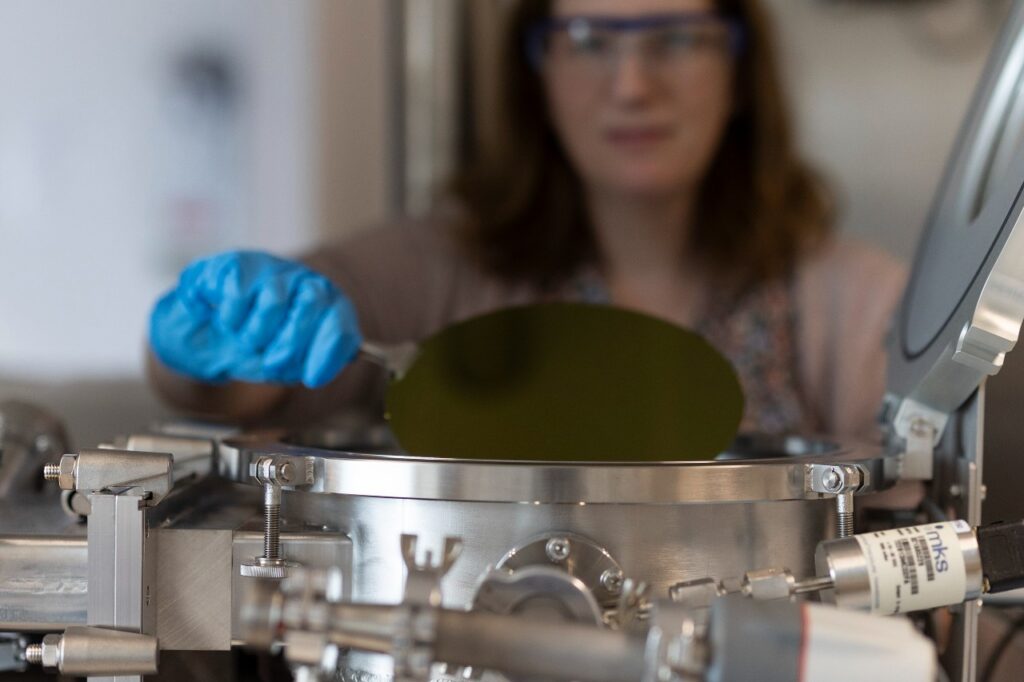
At Tyndall, research and innovation are already addressing many of the challenges facing operators of next-generation cloud and AI infrastructure. One key area of focus is the integration of renewable energy into increasingly complex energy systems. As data centres seek to source larger proportions of their electricity from variable renewable generation, questions emerge around grid flexibility, energy security and long-duration energy storage. Research in hydrogen systems, energy storage and flexible power networks is helping to explore how future digital infrastructure can operate as an active participant within low-carbon energy systems rather than simply a consumer of electricity.
Power delivery is emerging as another critical challenge. AI servers are becoming significantly more energy intensive, increasing the importance of reducing losses throughout electrical distribution systems. At Tyndall, our researchers are investigating advances in high-voltage DC architectures, integrated power electronics and next-generation semiconductor devices that have the potential to improve efficiency while reducing cooling requirements. For operators, these technologies could significantly lower both operational costs and carbon emissions.
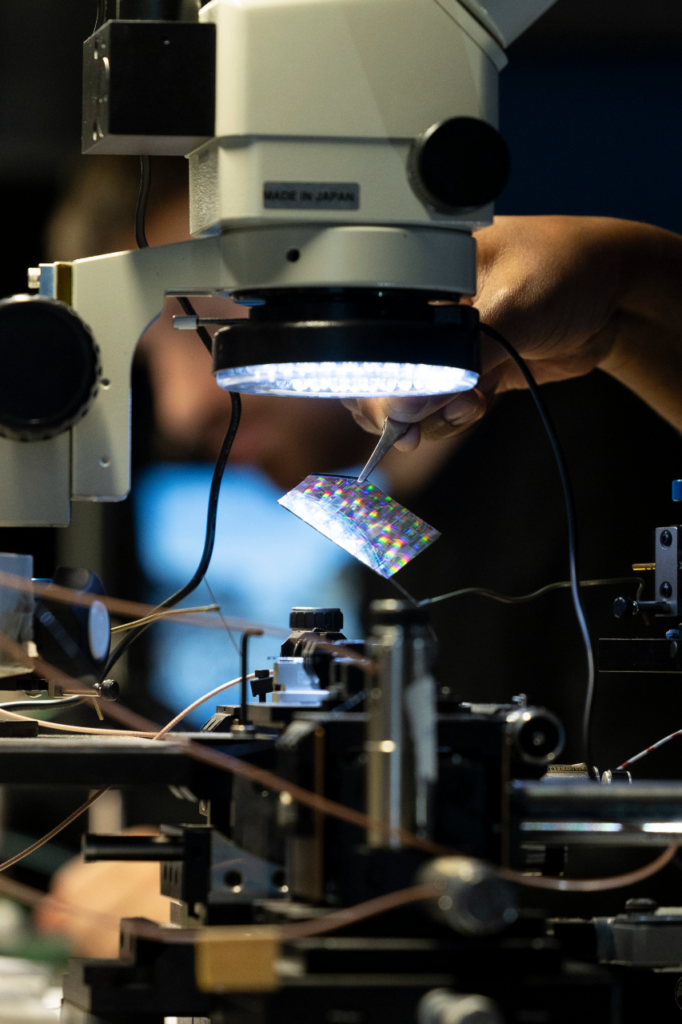
The challenge extends beyond delivering power to where it is needed. Moving data itself is becoming one of the largest sources of energy consumption inside advanced computing systems. As AI clusters continue to expand, traditional electronic interconnects are approaching practical limits. Tyndall is looking at photonic technologies that offer an alternative pathway, enabling information to be transmitted using light rather than electrical signals. The result could be substantial reductions in energy consumption while simultaneously increasing system performance.
New generations of AI processors are generating heat densities that conventional cooling technologies struggle to accommodate. Across the sector, liquid cooling is moving from an emerging concept to an operational necessity. Yet cooling itself presents a further opportunity. Tyndall is collaborating with industry partners to explore how this heat generated by data centres has the potential to support district heating schemes, industrial processes and local energy networks.
Looking further ahead, the industry’s biggest gains may come from entirely new approaches to computing. Tyndall is active in emerging fields such as quantum and neuromorphic computing along with advanced memory technologies, which altogether seek to reduce energy consumption at its source by fundamentally rethinking how information is processed.
Why Ireland has a Strategic Opportunity
Ireland possesses many of the ingredients required to lead this transition: a strong digital ecosystem, ambitious renewable energy targets and internationally recognised research capability. By accelerating collaboration between industry and research, Ireland can move beyond being a global location for data centres and become a global leader in the technologies that will define the future of decarbonised cloud computing.
Tyndall is uniquely positioned to support this transition, with research and innovation capabilities spanning the full technology stack required.
For deeper insights, we invite you to explore our forthcoming white paper, which outlines how innovation across the full semiconductor and digital technology stack together with decarbonisation and circular economy principles can help realise this ambition. We look forward to sharing the paper in the coming weeks.