

A new research project aims to strengthen how parents prepare for breastfeeding, addressing a critical gap in antenatal care.
The FirstDrops project will explore how best to support women to learn antenatal hand expression and safely collect colostrum — often referred to as “liquid gold” for its concentrated protective and nutritional properties.
Despite its recognised importance for maternal and infant health, existing support for antenatal colostrum collection remains fragmented. Parents frequently encounter inconsistent guidance, tools that are not designed to meet their needs, and practical challenges, all of which can undermine confidence at a critical point in the perinatal period.
Led by University College Cork (UCC) researchers in close collaboration with parents and healthcare professionals, the research will develop practical, evidence-informed approaches to strengthen early feeding support and improve outcomes for families.
The project is one of seven projects nationwide selected for support under the Research Ireland – Innovating in Health and Wellbeing Challenge which backs innovative research with the capacity to deliver scalable and sustainable solutions to some of Ireland’s most pressing health and wellbeing challenges.
Addressing a long-standing gap in breastfeeding support, FirstDrops, Reimagining Perinatal Colostrum Collection and Hand Expression Through Co-Design, will bring together three interconnected research strands aimed at reducing stress for parents, strengthening breastfeeding practices, and improving hospital workflows.
The strands include:
- Investigating how emerging approaches can better support the learning of complex, embodied healthcare skills through expert demonstration and feedback.
- Working collaboratively with parents and clinicians to rethink how this early stage of breastfeeding preparation is materially and practically supported in everyday contexts.
- Adopting a whole-pathway perspective, using participatory methods with families and hospital staff to re-envision how related processes are coordinated across home and clinical settings.
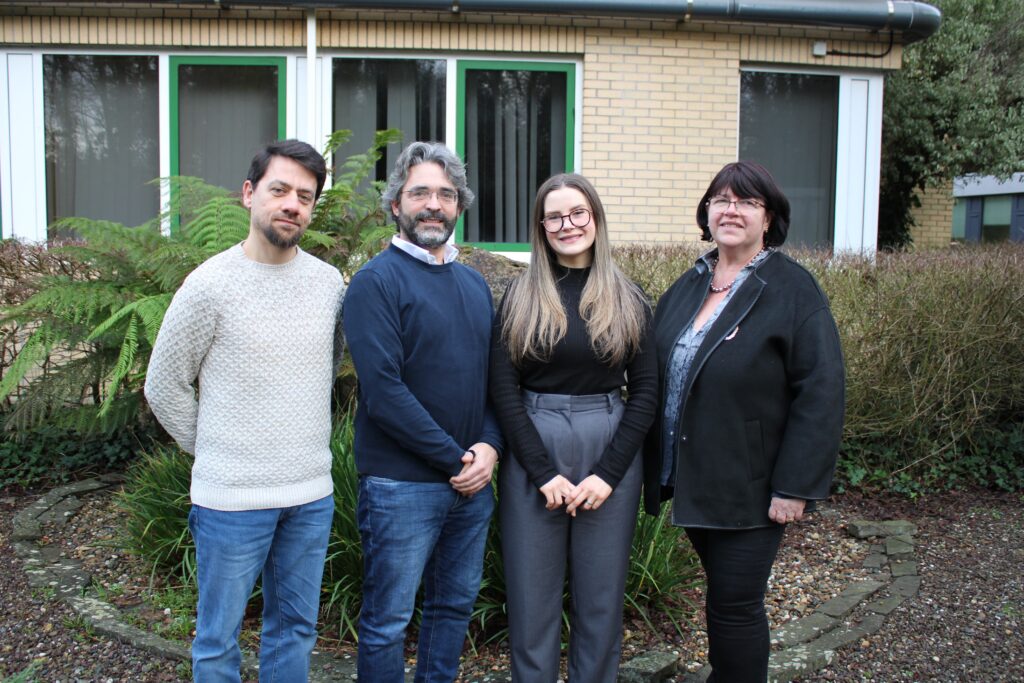
Led by Dr Kellie Morrissey, UCC School of Applied Psychology, the project builds on pilot research funded in 2025 through UCC’s Collective Social Futures programme. It has now secured €317,882 from Research Ireland to advance the work over the next 18 months, delivering proof-of-concept outputs, validated user requirements, and clearly defined design directions.
Dr Morrissey said:
I am delighted that Research Ireland has supported this collaborative and interdisciplinary project, which speaks to the importance of investing in maternal and child health and care. FirstDrops is grounded in the realities of a demanding and vulnerable period in parents’ lives, where small sources of uncertainty can carry significant weight and make or break many breastfeeding journeys.”
The interdisciplinary project is co-led by Dr Brendan O’Flynn along with senior researcher Dr Matteo Menolotto at Tyndall National Institute, with the Societal Impact Champion being Susan O’Driscoll from Cork University Maternity Hospital.
Dr O’Flynn said:
I am excited to contribute to the FirstDrops project. Advancing ICT in image processing and data analytics for prenatal care shows how research and technology can deliver real societal impact—supporting mothers at a crucial stage of pregnancy and improving outcomes for their infants long after birth.”
The Research Ireland – Innovating in Health and Wellbeing Challenge is a structured programme with three phases: Concept, Seed and Prize. The selected teams, upon successful progression through the Concept and Seed Phases, will have the opportunity for additional funding in the final phase of the programme, where prize funding of €1million will be on offer to the most competitive team.
Professor John F. Cryan, UCC Vice President for Research and Innovation said:
This project is an excellent example of the strength of interdisciplinary research at UCC. The seeds of this work developed from a UCC Futures – Collective Social Futures pilot research project and now enables these research teams from Applied Psychology and our flagship Tyndall National Institute to work together to develop innovative solutions that will better support families. I look forward to following their progress in this Challenge programme in the coming months.”