

Tyndall extends its congratulations to the winners of the STS Elionix Scientific Image Competition of Q1 2026!
Open to all researchers at Tyndall, the competition provides a platform to celebrate the artistic side of science, as seen through the microscope. Entrants were invited to submit images that not only reflect their research but also captivate the eye.
The judging panel for this quarter included Professor William Scanlon, CEO, Tyndall; Dr Graeme Maxwell, Head of Specialty Products & Services; Dr Daniela Iacopino, Researcher, MNS; Ursula Morrish, Marketing and Communications Manager
The judges selected three winning entries based on their originality, visual impact, and scientific relevance. The winners of the Q1 2026 competition are:
- Liam Roos – “Small Victories“
- Rupa Ranjani Palanisamy – “Colourburst Chaos“
- Anina Anju Balaraman and Ruth Houlihan – “PiezoelectriCITY”
Each winner will receive a €150 Me2You Gift Card, generously sponsored by STS Elionix, in recognition of their contribution to scientific communication and visual storytelling.
Small Victories
By Liam Roos, Photonics Packaging
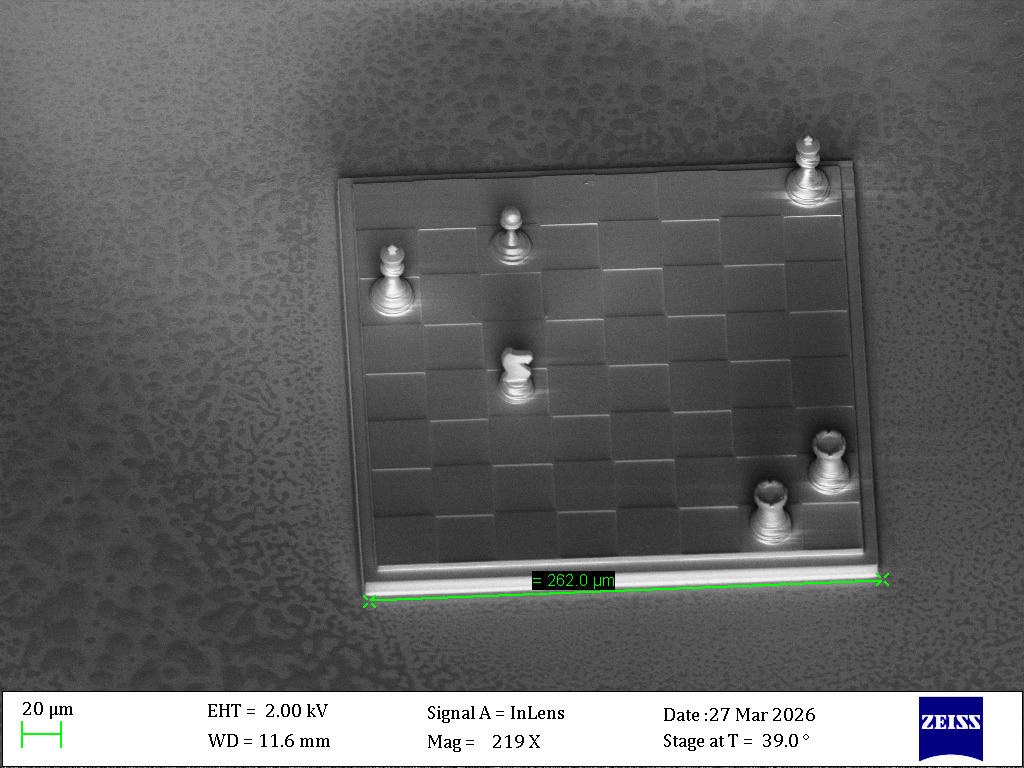
This image shows a microscopic chessboard fabricated using two-photon polymerisation, a high resolution 3D printing technique capable of producing complex structures on the microscale. In my research, the same method is used to fabricate micro-optical components that control the propagation of light within photonic systems. These structures can be designed to focus, redirect, expand, or otherwise shape optical beams with high precision. This particularly relevant in photonic packaging, where optical functionality must be integrated into very small volumes. The image therefore illustrates both the geometric precision of the fabrication process and its application to the development of functional micro-optics for advanced optical integration.
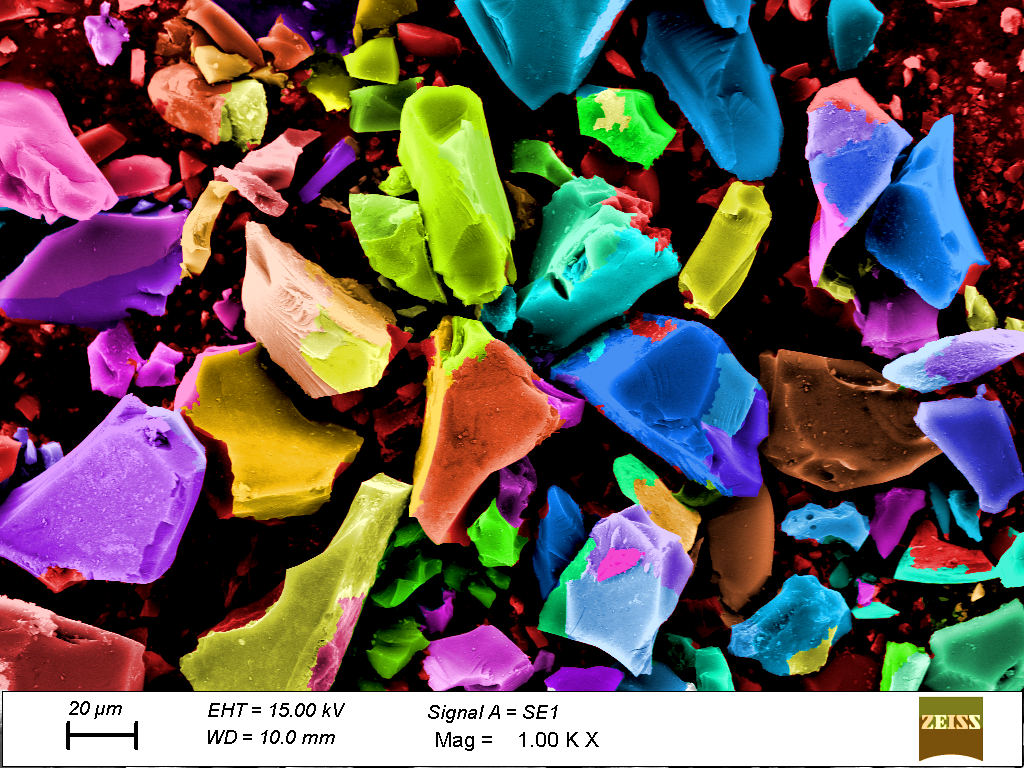
Colourburst Chaos
Rupa Ranjani Palanisamy and Rupa Kasturi Palanisamy, Advanced Energy Materials Group (AEM)
and Materials Chemistry and Analysis Group
(MCAG)
PiezoelectriCITY
By Anina Anju Balaraman and Ruth Houlihan, IPES
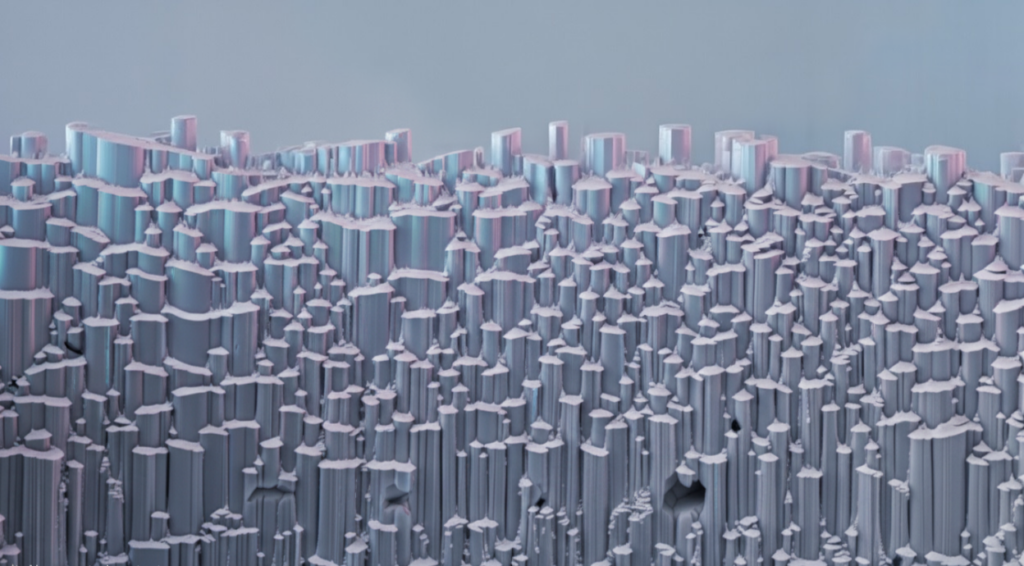
The image transforms the hidden interior of a piezoelectric multilayer ceramic capacitor into something strikingly familiar; a cityscape. Captured using scanning electron microscopy (SEM) and revealed through a precise xenon focused ion beam (FIB) cut, the image exposes a dense arrangement of polycrystalline grains and layered structures that resemble tightly packed buildings rising from the ground. There’s a sense of order and purpose in this microscopic “city,” where every structure plays a role in keeping the system functioning. Just as a real city thrives on connection and movement, this engineered landscape quietly enables the flow and conversion of energy; a bustling metropolis at a scale far beyond human sight.