

Tyndall researcher Dr Cara-Lena Nies was among a select group of early-career scientists from around the world chosen to participate in the 75th Lindau Nobel Laureate Meeting in Germany. Bringing together Nobel Laureates and emerging researchers across disciplines, this prestigious event provides a unique forum for scientific exchange, collaboration and inspiration. Here, Cara-Lena reflects on her experience, the conversations that shaped her thinking, and the renewed sense of curiosity she brought back to her research at Tyndall.
Every summer, Lindau, a tiny island on Lake Constance in southern Germany, becomes one of the most extraordinary places in science. For one intense week, hundreds of early-career researchers from around the world gather alongside Nobel Laureates to exchange ideas, debate global challenges and, perhaps most importantly, simply talk. Lectures are followed by coffee conversations, discussions continue over dinner, and Nobel Prize winners can just as easily be found answering questions on a lakeside walk as speaking from a stage. It is an unusual environment where the barriers between generations and disciplines seem to disappear, creating space for conversations that are difficult to imagine happening anywhere else.
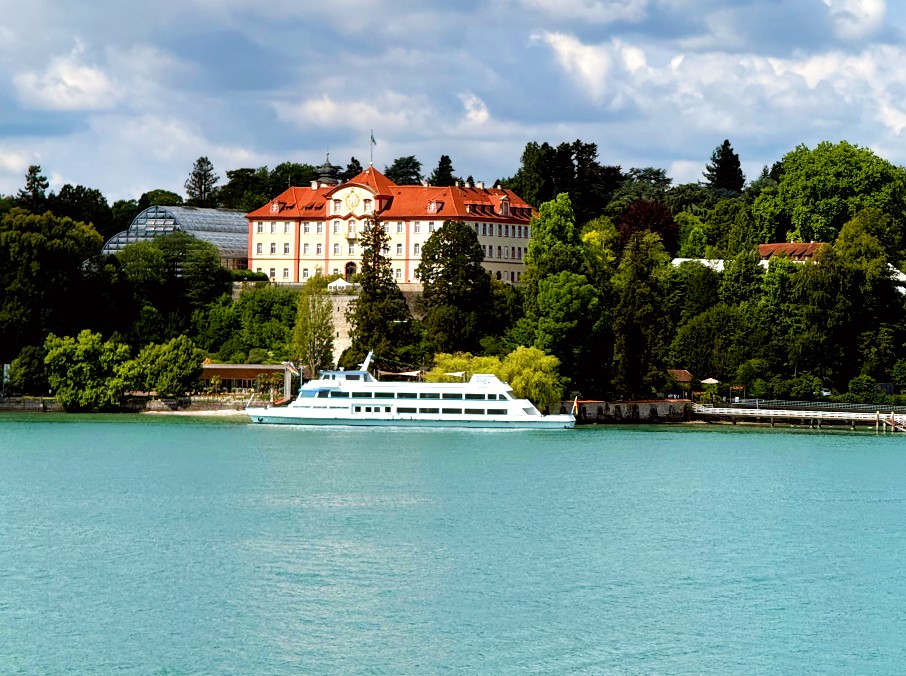
This year I was fortunate to attend the 75th Lindau Nobel Laureate Meeting. This milestone anniversary meeting was interdisciplinary, meaning that rather than focusing on a single discipline, it brought together researchers working at the intersection of at least two Nobel Prize fields. Nobel Laureates from Chemistry, Physics, Physiology or Medicine, Peace and Economic Sciences were all in attendance. I arrived expecting an unforgettable opportunity to meet some of the world’s greatest scientists. I left with something rather different: a renewed understanding of why I chose a career in research in the first place.
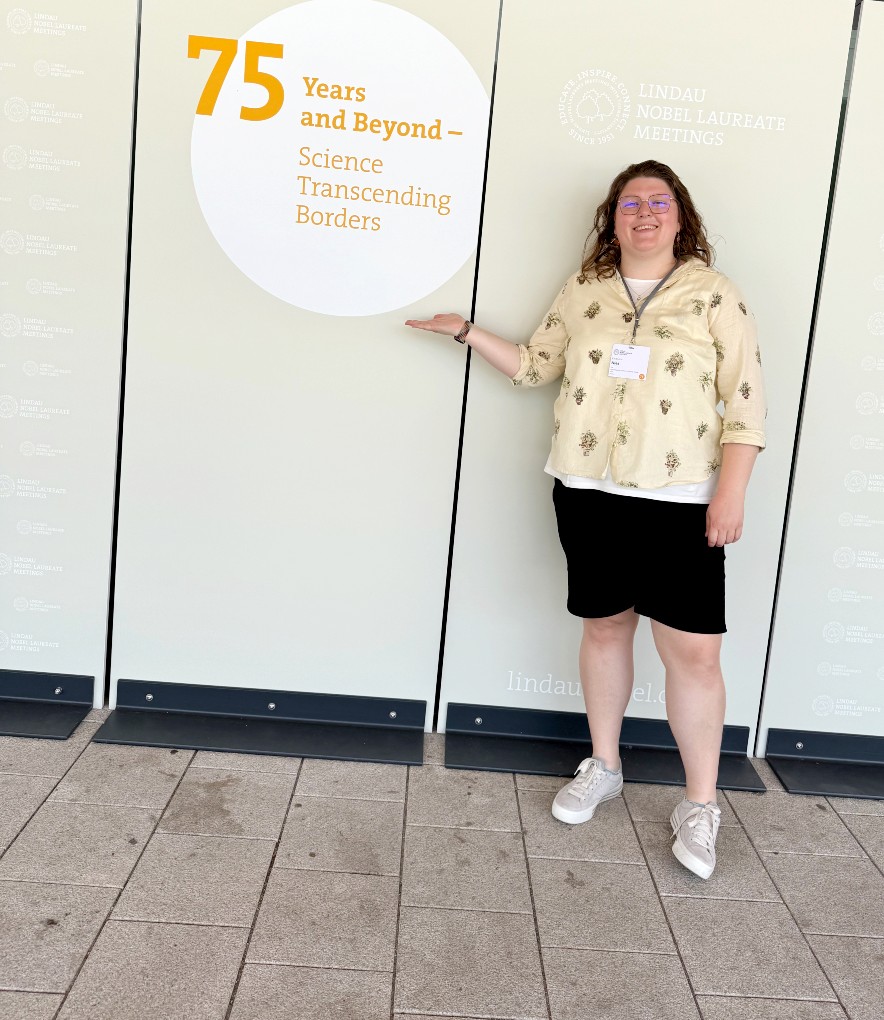
I’m Cara-Lena Nies, a Government of Ireland Postdoctoral Fellow at Tyndall National Institute, University College Cork. My research focuses on computational materials chemistry, using atomic-scale modelling to design new materials for applications ranging from nanoelectronics and sensing to environmental catalysis. Here are a few reflections on my week at Lindau.
1. What makes the Lindau Nobel Laureate Meeting different from other scientific meetings?
Unlike a traditional scientific conference, Lindau isn’t primarily about presenting your own research. It’s about conversation. Alongside lectures and panel discussions, there are small-group lunches, lakeside walks, informal discussion sessions and countless conversations over coffee.
That completely changes the atmosphere. Nobel Laureates become people you can ask questions, debate ideas with and learn from directly, rather than speakers on a stage. The week is designed to encourage curiosity, discussion and genuine exchange between generations of scientists.
2. Before you arrived, what did you expect, and what surprised you most?
Before arriving, I expected the highlight of the week to be meeting Nobel Laureates. Of course that was extraordinary, but what surprised me was how approachable they were. Lindau creates an environment where conversations happen naturally, whether over lunch, during a walk or in one of the informal discussion sessions.
Perhaps even more surprising was how much I gained from the other Young Scientists. We came from completely different disciplines and countries, but many of us were asking the same questions about careers, collaboration and the future of research. I left with new friendships and a much broader perspective on what it means to be a scientist.
3. Who or what inspired you at the event?
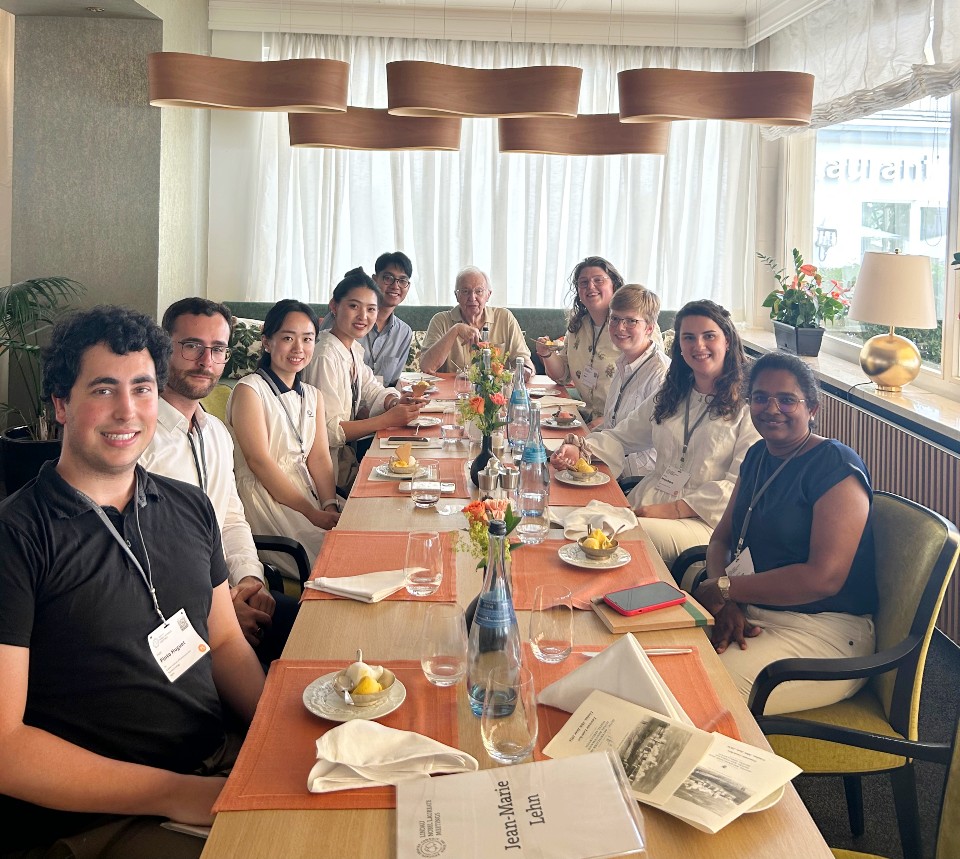
One of the highlights of the week was sharing dinner with Nobel Laureate Michael Levitt. Participants could choose any dinner table, and two other women and I ended up having a long conversation with him over the course of the evening.
As someone working on atomistic and multiscale modelling, his Nobel Prize-winning work on multi-scale chemical models was probably the closest to my own research of all the Laureates attending. Interestingly, we spent very little time in technical discussion. Instead, we talked about the opportunities and limitations of AI in research, the importance of perseverance, and the need for visible women role models in science.
That conversation has stayed with me because it wasn’t really about winning Nobel Prizes or scientific success. It was about building a meaningful career, staying curious, and supporting the next generation of scientists.
4. How has this experience impacted you and your research?
I suspect I’ll only fully appreciate the impact of this week once some time has passed and I can look back and think, “I never would have thought to do that before I went to Lindau.” Even so, I already feel it has changed the way I think about my role as a researcher.
Like many scientists, it’s easy to become immersed in your own research questions. Lindau encouraged me to think much more broadly about the role science plays in society, and about the responsibility researchers have to contribute to solving global challenges.
At the same time, one message came through consistently in my conversations with Nobel Laureates: curiosity matters. While science has an important role in addressing issues such as climate change, pollution and health, those breakthroughs ultimately come from people who are driven to understand the world simply because they want to know how it works. That reminder has rekindled my enthusiasm for research.
5. Selection to attend the Lindau Nobel Laureate Meeting is extremely competitive. What advice would you give to young scientists aspiring to attend?
The Nobel Laureates are, of course, a huge part of what makes Lindau so special, but they’re only part of the experience. Equally valuable is spending a week with hundreds of talented young scientists from across the world, representing every stage of an academic career, from Master’s students to newly independent researchers.
If attending the meeting genuinely excites you, I’d encourage you to apply. The competition is strong and the application process is rigorous, but the organisers are looking for people who are passionate about science and who will actively contribute to the discussions.
I applied because I was hoping to gain a new perspective. By the time I travelled to Lindau, I realised I was also looking for a reminder of why I had chosen research in the first place. The meeting gave me both.
6. Where do you see yourself in ten years’ time?
Before attending Lindau, I would probably have answered that I’d like to be leading my own research group.
After the meeting, my answer is now less specific. One of the things Lindau taught me is that science, and the world around it, is constantly changing. Many of the opportunities that will shape our careers don’t even exist yet, and it’s impossible to predict where curiosity might lead.
What I do know is that I hope I’m still contributing to science in ten years’ time, wherever curiosity takes me. If Lindau taught me anything, it’s that the most interesting careers are rarely the ones that are planned from the outset.
If any of this has sparked your curiosity, many of the lectures and discussions from this year’s Lindau Nobel Laureate Meeting are available to watch online through the Lindau Nobel Laureate Meetings website.
Beyond the prestige of attending the Lindau Nobel Laureate Meeting, Cara-Lena returns to Tyndall with renewed scientific curiosity, an expanded international network and fresh perspectives on the responsibility of researchers in addressing global challenges. Her experience reinforced the importance of interdisciplinary collaboration, lifelong learning and research leadership, while providing valuable insights that will help shape her future work in computational materials chemistry.
The opportunity to participate in the Lindau Nobel Laureate Meeting highlights the strength of the world-class talent being nurtured at Tyndall. In line with the vision set out in Tyndall 2030, opportunities such as these help researchers expand their international networks, gain fresh perspectives and develop the leadership skills needed to contribute to future scientific breakthroughs.
Cara-Lena’s participation in the 75th Lindau Nobel Laureate Meeting was supported by Research Ireland and co-funded by Verband der Chemischen Industrie e.V. (VCI). She also acknowledges the support of University College Cork in her nomination and her supervisor Michael Nolan at Tyndall National Institute for supporting her attendance at the meeting.
*Tyndall is a partnership between the Department of Further and Higher Education, Research, Innovation and Science and University College Cork.*