

Bob Savage is Strategic Advisor at 3SIXTY and a highly accomplished business leader with more than 35 years of experience in global technology operations, strategic leadership and business transformation. He has built a distinguished career with Dell Technologies and EMC, where he held senior leadership roles across manufacturing, engineering, IT and customer services, including Vice President, Cork Site Leader and Regional CIO for EMEA. He currently serves on the Board of Tyndall National Institute and the CRANN centre, and also chairs the South-West Regional Offshore Renewable Energy Working Group. A Chartered Engineer and Fellow of the Irish Academy of Engineers, Bob is widely recognised for his contributions to innovation, skills development and industry-academic collaboration. He has held a number of influential leadership positions, including Chair of the National Skills Council, Chair of the Governing Bodies of CIT and MTU, Board Member of Enterprise Ireland, and President of the American Chamber of Commerce Ireland.
Throughout his career, Bob has worked at the forefront of technology transformation, leading global operations, digital initiatives, and organisational change. He is particularly passionate about developing talent, championing upskilling and reskilling initiatives, and helping organisations adapt to emerging technologies. He sees lifelong learning, including flexible pathways such as micro-credentials, as critical to ensuring that individuals, businesses and regions remain competitive in a rapidly evolving global economy.
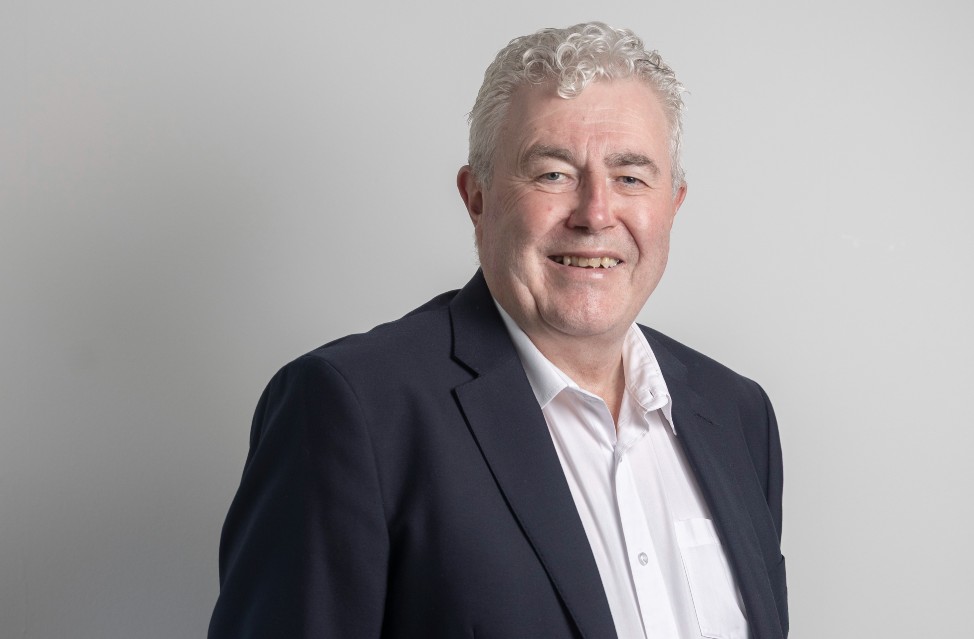
As Tyndall advances its 2030 strategic plan vision, Bob brings valuable insight into how innovation ecosystems, talent pipelines and industry collaboration can strengthen Ireland’s competitiveness and accelerate the translation of research into economic and societal impact. Drawing on decades of experience working within multinational technology environments, he is optimistic about Ireland’s future opportunities in semiconductor technologies. He believes that strong partnerships between industry, research and education will be essential to ensuring Ireland remains relevant, resilient and globally competitive.
How did your industry experience help shape Tyndall 2030?
Throughout my career, I have had the opportunity to lead teams and organisations through periods of significant technological and organisational change. From working in global technology operations, digital transformation, customer-focused innovation and strategic leadership roles, a consistent lesson has been that long-term success depends on creating the right environment for people, technology and ideas to thrive together.
One of the most important things I have learned is that innovation is fundamentally about people. Diverse teams, bringing different perspectives and experiences, consistently produce better ideas and better outcomes. Creating a culture where individuals are enabled and empowered to contribute, collaborate, learn and challenge conventional thinking is essential for any organisation that wants to remain relevant in a rapidly changing world.
My experience has also reinforced the critical importance of talent development. As technologies evolve, organisations must continuously invest in upskilling, reskilling and leadership development to ensure they have the capabilities needed for the future. Talent is often the defining factor between ambition and execution. Without the right people, even the most advanced infrastructure, technology platforms or research programmes cannot realise their full potential.
This perspective strongly influenced the development of Tyndall 2030. Across consultations with industry, government and research stakeholders, a recurring theme was that skills and talent availability represent the greatest challenge to Ireland’s semiconductor ambitions. While investment in research infrastructure and technology is vital, sustainable success ultimately depends on building a strong pipeline of highly skilled researchers, engineers, technologists, innovators and future leaders.
Tyndall is uniquely positioned to play that role. By combining world-class research with deep industry engagement, it can develop the talent, leadership capability and entrepreneurial mindset needed to strengthen Ireland’s semiconductor ecosystem and support future growth.
Tyndall 2030 therefore places talent at the heart of its strategy. The new strategy’s ambition is to establish Tyndall as Ireland’s leading hub for semiconductor talent development and a destination of choice for world-class researchers and innovators. Through agile career pathways, leadership development, industry engagement and a culture that encourages innovation and entrepreneurship, we aim to create an environment where people can reach their full potential while contributing to national and international impact.
As a Board member, I draw on my experience in technology leadership, business transformation, talent and ecosystem development to help ensure Tyndall remains ambitious, relevant and globally connected. Supporting talent attraction, development and retention; strengthening collaboration between research and industry; and creating pathways that enable people to translate knowledge into impact will be essential to delivering Tyndall’s 2030 ambitions and strengthening Ireland’s long-term competitiveness in semiconductors and advanced digital technologies.
What opportunities do you see for Tyndall to lead globally over the next decade?
The opportunities for Tyndall over the coming decade are significant because semiconductors are increasingly central to every aspect of the global economy. From artificial intelligence and communications to healthcare, energy and advanced manufacturing, countries that can develop the technology, talent and innovation ecosystems around semiconductors will be best positioned to compete internationally.
What stands out in the Tyndall 2030 Strategy is its ambition to act not only as a centre of research leadership but also as a catalyst for innovation and economic impact. The commitment to strengthening technology translation, supporting indigenous enterprise growth and deepening engagement with industry aligns closely with what is required to build a resilient and competitive innovation economy.
One of Tyndall’s greatest opportunities lies in its ability to connect stakeholders across the entire ecosystem. By bringing together multinational companies, SMEs, startups, researchers, investors and policymakers, the Institute can help accelerate innovation, strengthen supply chains and create new commercial opportunities. My experience in the multinational sector has shown me the value of these ecosystems. They create networks, attract FDI investment, foster entrepreneurship and enable knowledge sharing that benefits the broader economy.
I also believe Tyndall has an important role to play in helping Ireland anticipate and prepare for future technology trends. The world is changing rapidly, with new opportunities and challenges emerging all the time. Institutes that can identify emerging technologies early, build capability around them and help industry adopt them will be increasingly valuable. Through its role as a connector between industry and academia, and between Ireland and Europe, Tyndall can amplify its influence and strengthen Ireland’s position as a global location of choice for semiconductor research, innovation and investment.
Equally important is talent. Ireland’s future competitiveness will depend on our ability to attract, develop and retain world-class researchers, engineers and technology leaders. Through its partnerships with universities, industry and government, Tyndall is uniquely positioned to help build that pipeline. Continued investment in education, lifelong learning and flexible approaches such as micro-credentials will be critical to ensuring people can develop the skills required for tomorrow’s industries.
Most importantly, Tyndall has the opportunity to be a globally recognised example of how research leadership, industry engagement and talent development can work together to deliver sustainable economic and societal impact. For me, that is where the greatest opportunity lies.
Download Tyndall Strategic Plan 2030
Tyndall is a partnership between the Department of Further and Higher Education, Research, Innovation and Science and University College Cork.