

Prof. Bram Nauta is a Distinguished University Professor at the University of Twente, an internationally recognised pioneer in integrated circuit design and microelectronics research whose contributions to the field have been recognised with the prestigious Stevin Prize. He serves on the board of Tyndall National Institute and is widely recognised for his contributions to analogue and radio-frequency CMOS circuit design. Throughout a distinguished career spanning academia, industry and international research leadership, he has played a significant role in semiconductor chip technology innovation, including the development of the widely known Nauta circuit. Reflecting his commitment to building long-term capability and talent pipelines, he also co-founded ChipTechTwente, a thriving semiconductor ecosystem that brings together more than 50 companies, partners and knowledge institutions to strengthen semiconductor innovation and industry development in the region.
At Tyndall, Bram brings first-hand insight into how world-leading semiconductor ecosystems are built and sustained. This experience provides valuable perspective as Tyndall delivers its 2030 ambition to strengthen Ireland’s semiconductor ecosystem and position the Institute as a national platform connecting academia, industry, entrepreneurs and talent to deliver innovation at scale.
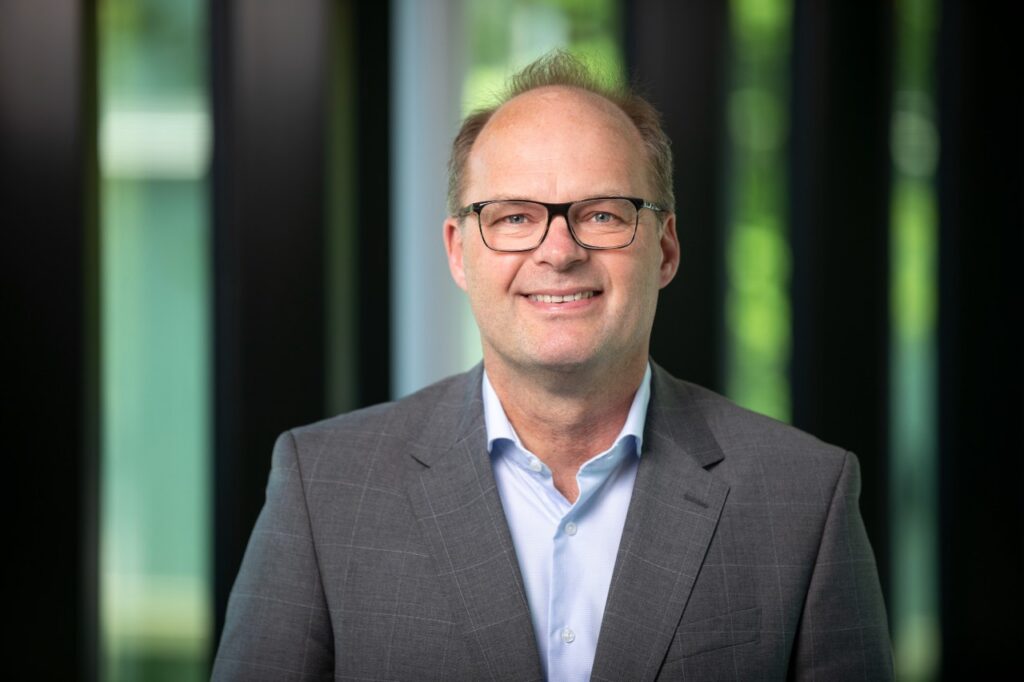
In this Q&A, Bram shares his learnings on the importance of curiosity-driven innovation, talent development and building strong semiconductor ecosystems. He reflects on the opportunities for Tyndall in terms of building international leadership in semiconductor technologies, supporting the next generation of researchers and engineers, and converting world-class research into lasting economic and societal impact through the ambitions of the Tyndall 2030 Strategy.
How does your experience in engineering and innovation help shape Tyndall’s future direction?
I have discovered that ‘eureka’ moments often begin with curiosity. Some of the most important advances in integrated circuit design came from asking simple questions, challenging conventional engineering approaches and exploring ideas that initially seemed unconventional. Creating an environment where researchers and engineers alike have the freedom to experiment, tinker about and solve difficult problems, is essential to achieving meaningful breakthroughs.
Innovation in the semiconductor industry requires a careful balance between precision and creativity. Engineers must work with extraordinary levels of accuracy while also being willing to think differently and pursue new ideas. Equally important is attracting the right people. The most successful R&I environments are those that bring together talented individuals who are curious, ambitious and motivated to understand how things work and how they can be improved.
As a Board member, I draw on my experience in integrated circuit design, building internationally recognised research groups and fostering collaboration across research, industry and education. One lesson I have learned is that sustained leadership in semiconductors requires more than research leadership. It requires the critical mass of talent, infrastructure, companies and partnerships needed to transform ideas into long-term capability and impact.
What opportunities do you see for Tyndall over the next decade?
One of the greatest opportunities for Tyndall over the next decade is to help build the critical mass of expertise, infrastructure and industrial engagement needed for Ireland to become a recognised leader in semiconductor innovation.
What particularly stands out is Tyndall’s ability to support innovation across the entire ecosystem, from early-stage research through to technology translation and industrial deployment. The Institute is already providing critical infrastructure and expertise to startups and SMEs developing next-generation products, helping companies access capabilities that would otherwise be difficult to build independently.
Another major opportunity lies in talent development. The future of semiconductor innovation will depend on attracting exceptional researchers and engineers and providing them with opportunities to develop. Programmes such as the Tyndall Summer Fellowship are particularly important because they expose undergraduate students to world-class research at an early stage and help to start building the pipeline of next generation of industry leaders, entrepreneurs and academic researchers. Likewise, Tyndall’s Semiconductor Skills Training Programme equips professionals from the semiconductor sector with the practical, industry‑ready skills needed to thrive in a fast‑moving semiconductor landscape. By strengthening lab‑to‑fab pathways, we accelerate the translation of cutting‑edge research into manufacturable technologies, commercial products, and high‑impact innovation.
I have also seen how powerful a connected ecosystem can be. When researchers, startups, SMEs, established companies and educators are brought together around a shared ambition, innovation accelerates, talent is retained and new industrial opportunities emerge. Tyndall has the potential to play a similar role for Ireland, acting as a national focal point that connects research leadership with industry needs and entrepreneurial activity.
Download Tyndall Strategic Plan 2030
Tyndall is a partnership between the Department of Further and Higher Education, Research, Innovation and Science and University College Cork.