

Key Information
Title: Simultaneous Wireless Information and Power Transfer for Periauricular Electromyography
Acronym: SWIPT-PEMG
Duration: 2025-2027 (3 Nov 2025 to 2 Nov 2027)
PI Name: Gregory Moore (MSCA Fellow); Daniel O’Hare (Supervisor)
Topic: HORIZON-MSCA-2024-PF-01-01
Coordinator: Tyndall National Institute (University College Cork)
Total Participants: 1
Project No:101210982
EU Contribution: € 268 568,64
Project Information
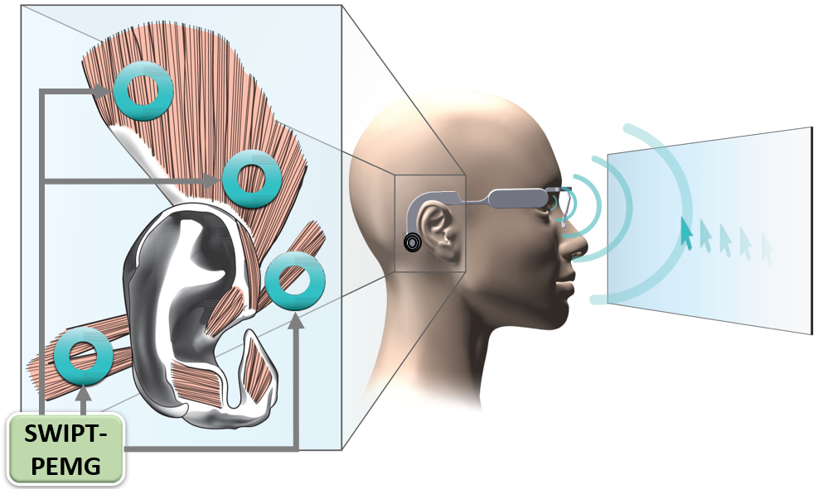
More than one million people worldwide live with severe paralysis caused by high spinal cord injury, amyotrophic lateral sclerosis (ALS) or locked-in syndrome. Brain-computer interfaces can restore some independence but need risky surgery beneath the skull, while external aids such as eye-gaze trackers use up the few movements a person still has. The small muscles around the ear, supplied by the great auricular nerve (C2), stay connected even after the highest spinal injuries, and their electrical activity can be trained to steer a cursor, wheelchair or robotic arm.
SWIPT-PEMG is developing a tiny, battery-free implant that sits beneath the skin near the ear and records these periauricular electromyography (PEMG) signals. A custom chip in GlobalFoundries 22FDX technology conditions and compresses the signals, then sends them at up to 384 kbps to a reader worn on glasses, which powers the implant wirelessly at the same time. The aim is a minimally invasive device that can be mass produced at very low cost.