

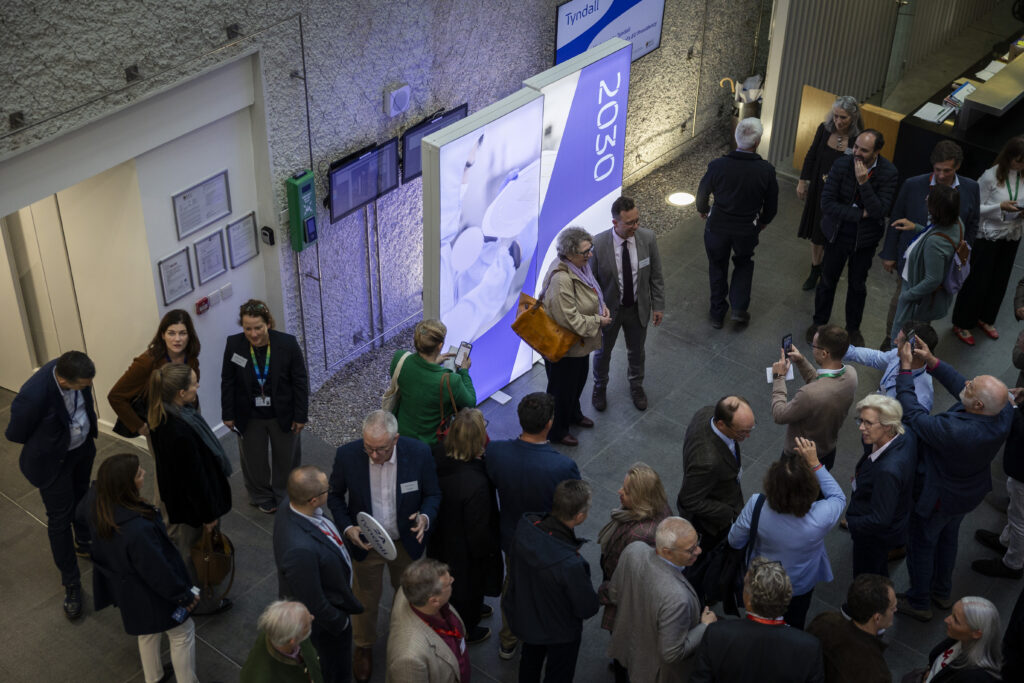
EU Ambassadors from all 27 Member States visited Tyndall National Institute last week as part of Ireland’s Presidency of the Council of the European Union, gaining first-hand insight into the research, innovation and talent development helping to shape Europe’s semiconductor future.
The delegation forms part of the Committee of Permanent Representatives (COREPER II), which brings together the EU ambassadors of all Member States to prepare and coordinate the work of the Council of the European Union across key policy areas including economic affairs, foreign affairs, and justice and home affairs. The visit is a longstanding element of each EU Presidency, providing Member States with an opportunity to engage directly with key national stakeholders.
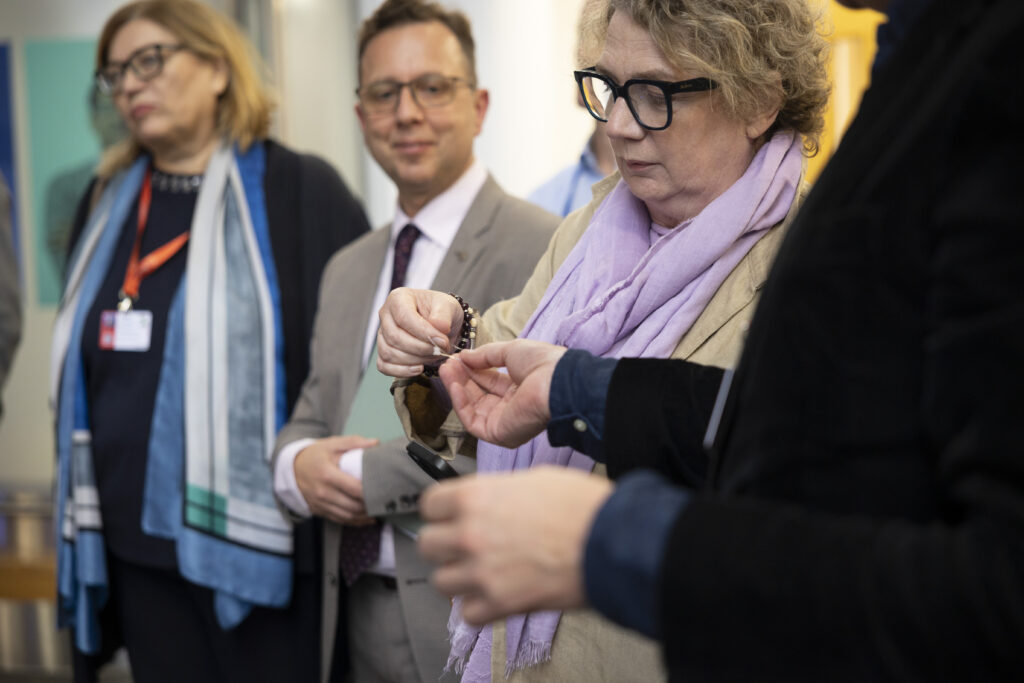
Welcoming the delegation, Professor Giorgos Fagas, Director of Strategic Development at Tyndall National Institute, highlighted the critical role semiconductors play in Europe’s future competitiveness, resilience and technological sovereignty. He outlined how Tyndall connects research, industry and talent to turn scientific excellence into economic and societal impact.
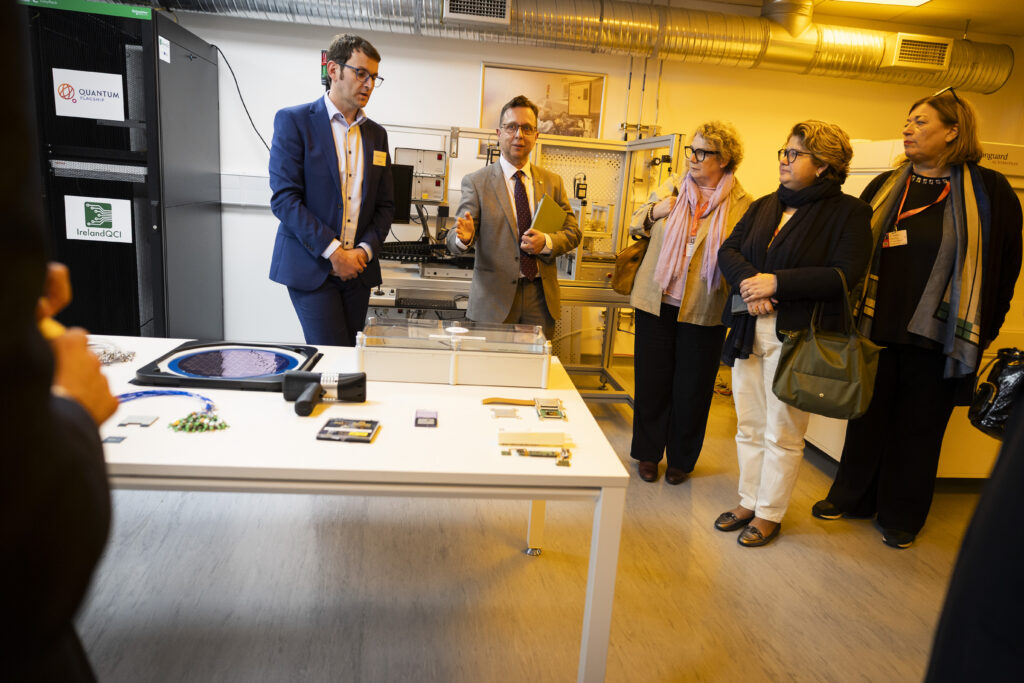
The visit showcased Ireland’s ambitions under the national semiconductor strategy, Silicon Island, which aims to strengthen Ireland’s position within the global semiconductor value chain. As Ireland’s national hub for semiconductor research and innovation, Tyndall plays a central role in delivering that strategy through advanced research infrastructure, industry collaboration, workforce development and commercialisation activities. The institute also leads Ireland’s Chips Competence Centre (I-C3), participates in European Chips Joint Undertaking pilot lines (FAMES, PIXEurope ,NanoIC, and P4Q), and leads RINN Semiconductors, a €70 million national investment in semiconductor research and innovation.
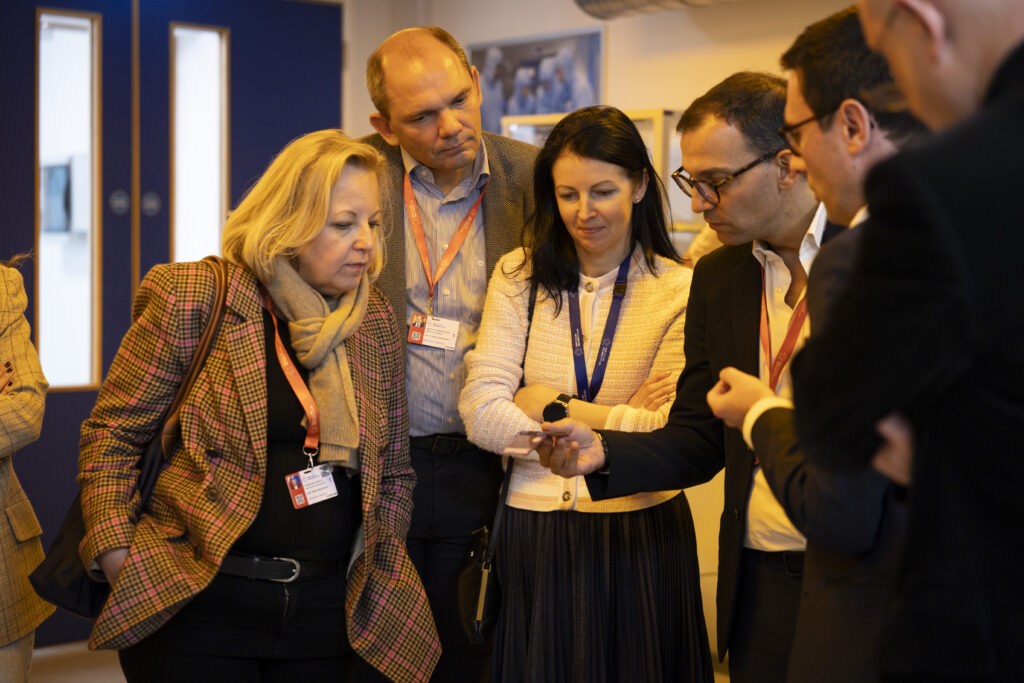
During a tour of Tyndall’s research facilities, ambassadors saw how semiconductor technologies are moving from laboratory research to real-world applications. Demonstrations included advanced semiconductor manufacturing and rapid prototyping, photonics packaging, next-generation wireless technologies for future 6G communications, and reliability testing for aerospace, medical and telecommunications applications.

The visit highlighted talent as another critical priority for Europe’s semiconductor industry. Tyndall currently supports more than 170 postgraduate researchers and expects to train more than 400 people through Tyndall’s semiconductor skills programme this year, helping build the workforce needed to support Europe’s growing semiconductor ecosystem.
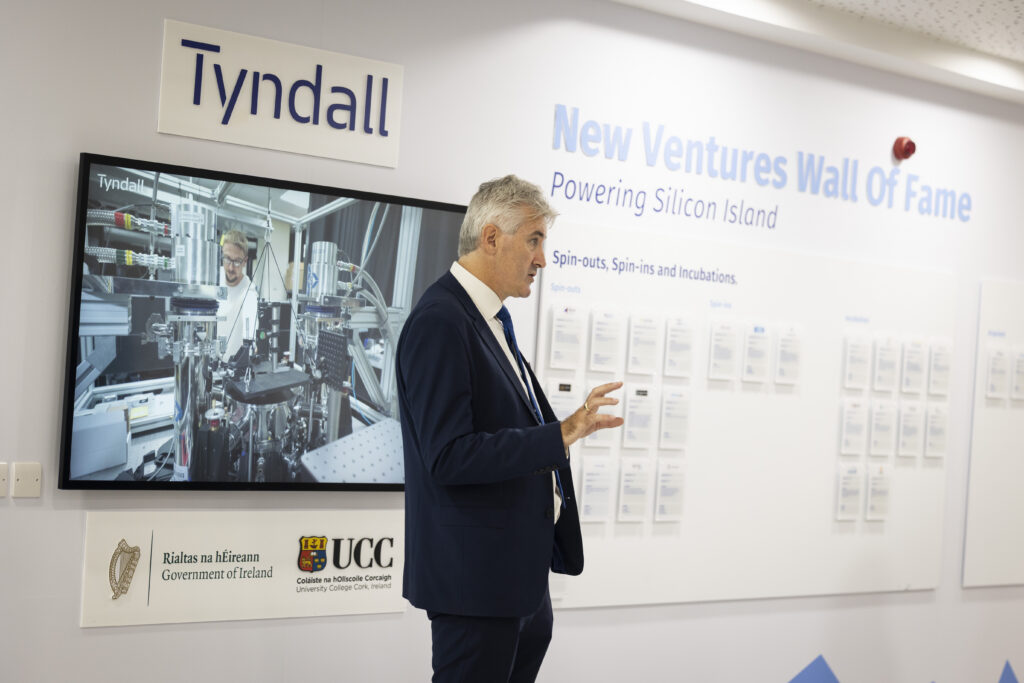
The ambassadors also learnt about Tyndall’s campus expansion, supported by more than €100 million in government investment, which will double the institute’s footprint and strengthen Ireland’s capacity to support semiconductor research, innovation and industrial collaboration.
Speaking about the visit, Professor Giorgos Fagas, Director of Strategic Development, Tyndall, said: “Europe’s future competitiveness will depend on its ability to translate world-leading research into industrial impact. At Tyndall, we work closely with industry, academia and policymakers across Europe to develop the semiconductor technologies, skilled talent and innovation ecosystems needed to secure Europe’s leadership in critical technologies.”
As Europe seeks to strengthen its semiconductor capabilities through initiatives such as the European Chips Act, the visit demonstrated how Ireland, through Tyndall, is contributing to a more competitive, innovative and resilient European technology ecosystem.