

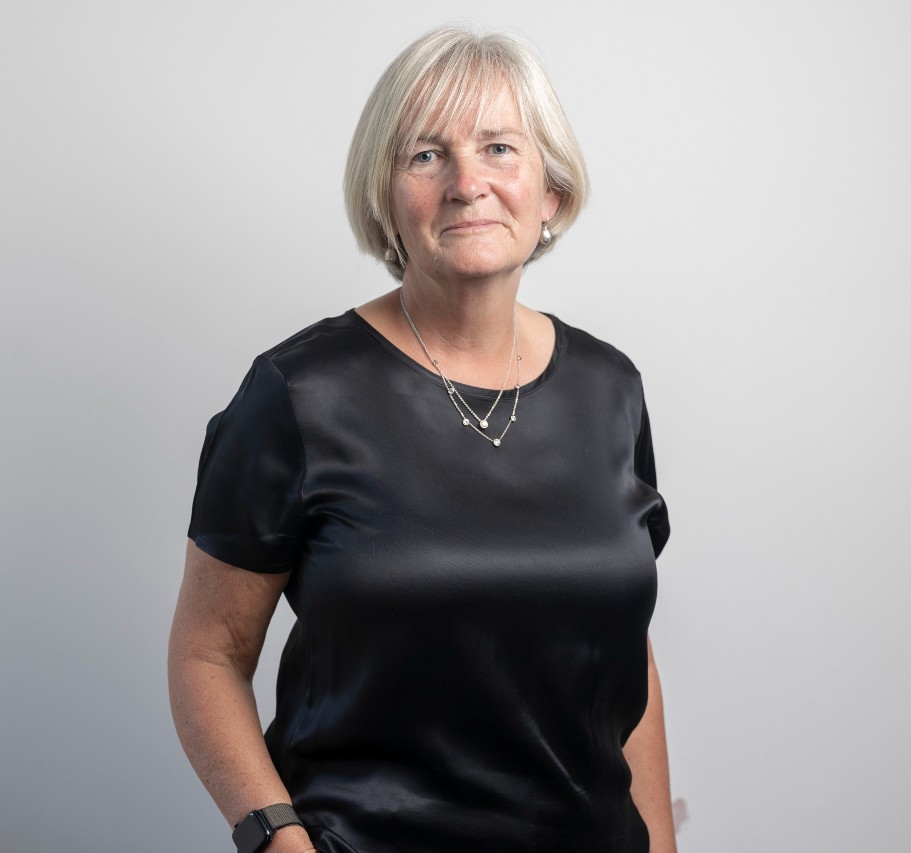
Ann-Marie Holmes is the Former Corporate Vice President and Co-General Manager of Intel Worldwide Semiconductor Manufacturing, where she led semiconductor manufacturing operations across Intel’s global factory network. As the first Irish graduate hire to become an Intel Corporate Vice President, she built a distinguished career spanning more than three decades in engineering, manufacturing and operational leadership. She currently serves on the Boards of Tyndall National Institute and Digital Manufacturing Ireland and is Vice President of Engineers Ireland. Internationally recognised for her leadership in manufacturing excellence, technology deployment and organisational transformation, she is also a respected advocate for diversity, inclusion and equality across the global technology sector.
As Tyndall advances its ambition to become Ireland’s global semiconductor R&D innovation hub, Ann-Marie provides a valuable industry perspective on what it takes to move innovation beyond the laboratory. Having spent her career bringing advanced technologies from development into real-world application, she understands how close collaboration between RT0s and industry can accelerate innovation and ensure that breakthrough technologies address real-world challenges. In this Q&A, Ann-Marie reflects on how her experience has informed Tyndall 2030 and how sustained co-development with both multinational and indigenous companies will be essential to Ireland’s future competitiveness.
How has your experience working at the intersection of industry and innovation shaped your perspective on Tyndall 2030?
Developing a breakthrough technology is a significant achievement, but innovation does not end with discovery. Delivering impact requires the right combination of people, capability, culture and execution. Those that succeed are those that create the conditions for innovation to thrive and successfully bridge research, industry and commercial deployment.
My experience in the semiconductor industry has shown me that successful innovation depends on more than technical excellence alone. It requires strong leadership, multidisciplinary collaboration, a clear understanding of industry needs and an appetite for continuous improvement. Successful co-development is built on shared ambition, mutual trust and a willingness to learn from different viewpoints.
This perspective strongly influenced my thinking around Tyndall 2030. One of the most compelling aspects of the strategy is its ambition to position Tyndall as a global semiconductor R&D innovation hub through sustained engagement with both multinational and indigenous companies. Creating an environment where researchers and industry work side by side will be essential to accelerating innovation and strengthening Ireland’s long-term competitiveness.
What opportunities do you see for Tyndall over the next decade?
The semiconductor industry is entering a period of extraordinary growth and strategic importance. Emerging technologies such as artificial intelligence, advanced communications, healthcare innovation, and sustainable energy systems will all depend on continued innovation in semiconductors.
This presents a major opportunity for Tyndall. Global investment in semiconductors is creating increased demand for trusted research and innovation (R&I) partners that have the ability to bring together researchers, technology innovators, industry leaders and entrepreneurs to address complex technological challenges. By combining research leadership with technical expertise and close industry engagement, Tyndall is well positioned to strengthen its role as a global semiconductor R&D innovation hub and a catalyst for innovation across the ecosystem.
The ambition to host at least 30 companies in residence is particularly compelling. Creating this concentration of talent, expertise and industrial capability has the potential to generate new collaborations, accelerate knowledge exchange and create a vibrant environment for semiconductor innovation.
We are already seeing the impact of this approach. Long-standing relationships with global industry leaders, including Intel, demonstrate the value of sustained collaboration around shared technology challenges. MagIC, Tyndall’s integrated magnetics platform, is a strong example of how research leadership, industry engagement and enabling infrastructure can come together to advance innovation in energy-efficient electronics. Through the FAMES pilot line, this technology is now accessible to a wider research and innovation community, creating opportunities for further collaboration and technology advancement.
Download Tyndall Strategic Plan 2030
Tyndall is a partnership between the Department of Further and Higher Education, Research, Innovation and Science and University College Cork.