

Dr Laura Burke is a senior organisational leader with extensive expertise at a National and European level. She is an experienced CEO, Board Chair and Board Member. Laura currently serves on the Boards of Tyndall National Institute, the Dublin Airport Authority (daa) plc, the European Institute for Innovation and Technology (EIT) Water and Genio CLG. Laura is Adjunct Professor of Environmental Policy at University College Dublin.
As a new member of the Tyndall Board, Laura brings extensive experience at the intersection of sustainability, environmental stewardship, innovation and public policy.
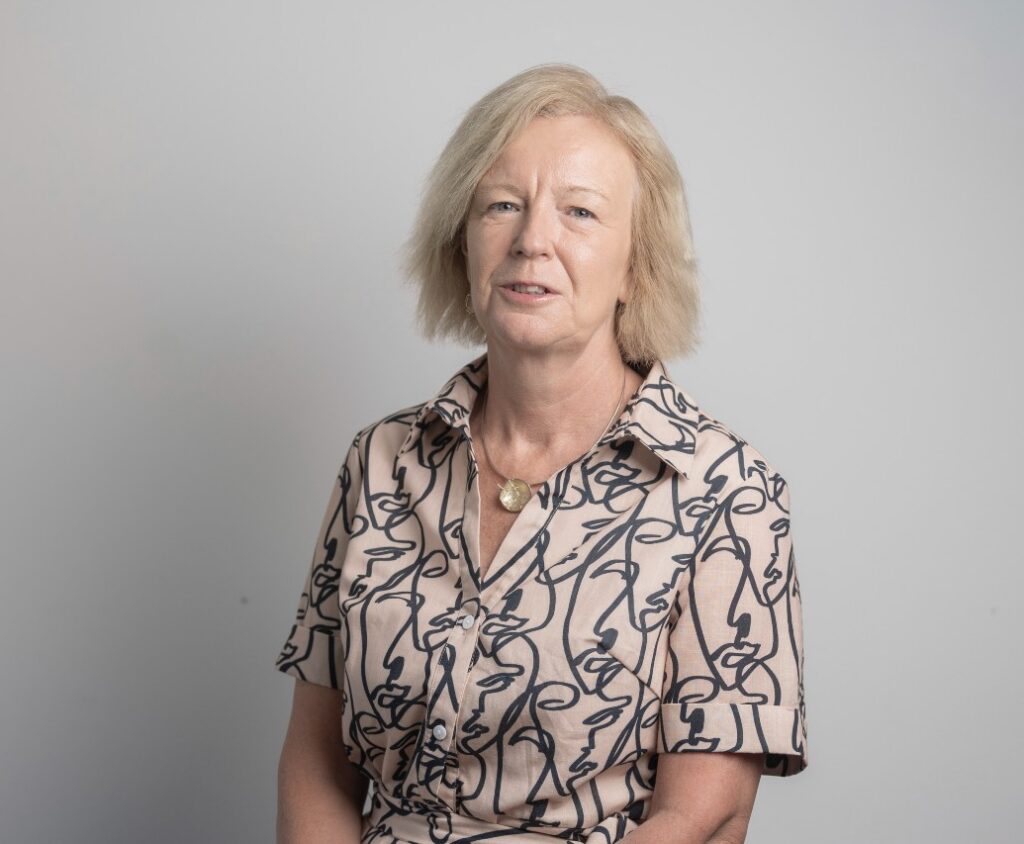
In this Q&A, Laura reflects on the importance of sustainable innovation, the opportunities for Ireland within the global semiconductor sector, and how Tyndall can help ensure future technological advances contribute to both economic competitiveness and environmental resilience.
How will your experience in environmental policy and sustainability help shape Tyndall’s future direction?
Throughout my career, I have seen how scientific research and innovation are becoming increasingly important in informing policy decisions and helping governments and society respond to challenges such as climate change, environmental degradation and sustainable economic development
One lesson I have learned is that sustainability and competitiveness are not competing objectives. The organisations that succeed over the long-term are those that can innovate and grow while also considering their environmental and societal impact. As new technologies emerge and industries transform, there is a growing need to ensure sustainability is embedded from the earliest stages of research, development and deployment.
Tyndall’s 2030 Strategy sets out an ambitious vision to position Ireland as a global leader in sustainable semiconductor innovation. As Ireland’s national institute for semiconductor research and innovation, Tyndall is uniquely placed not only to advance world-class research but also to help shape the policy environment that enables innovation, competitiveness and sustainability to thrive together. Through its leadership role within Ireland’s semiconductor ecosystem and its engagement with initiatives such as Silicon Island, Impact 2030 and the European Chips Act, Tyndall has an important opportunity to influence future policy discussions at both national and European level.
My experience in environmental policy, governance and sustainability can support Tyndall’s ambition to be a trusted voice in these conversations. I hope to contribute to Board discussions on how policy, regulation and responsible innovation can strengthen Ireland’s semiconductor ecosystem while ensuring sustainability remains a core consideration. This includes supporting approaches that addresses key environmental challenges such as advancing resource efficiency, minimising energy consumption and CO2 emissions, water stewardship and climate resilience, while reinforcing Tyndall’s role as a national convenor that connects deep-tech research, industry and policymakers around these shared goals.
What opportunities do you see for Tyndall over the next decade?
Over the next decade, I believe Tyndall has a unique opportunity to help position Ireland as a global leader in sustainable semiconductor innovation. As semiconductor technologies become increasingly critical to economic competitiveness, digital transformation, energy systems, healthcare and climate solutions, the organisations that can combine technological leadership with responsible innovation will be best placed to lead. Tyndall’s 2030 Strategy recognises this opportunity and sets out an ambition not only to advance world-class research but also to translate that research into economic, societal and environmental impact.
A significant opportunity lies in Tyndall’s ability to influence the future direction of semiconductor innovation in Ireland and Europe. Through its central role in Ireland’s semiconductor ecosystem and its engagement with initiatives such as Silicon Island and the European Chips Act, Tyndall is well positioned to help shape discussions around technology, skills, competitiveness and sustainability.
I also see growing opportunities for Tyndall to lead in areas where sustainability and semiconductor innovation intersect. As demand for advanced technologies accelerates globally, there will be increased focus on energy efficiency, resource use, water stewardship and climate resilience across the semiconductor value chain. Tyndall’s research capabilities, industry partnerships and international networks create a strong platform to develop technologies that not only drive economic growth but also contribute to broader environmental and societal goals. Perhaps most importantly, Tyndall has an opportunity to strengthen its role as a trusted convenor, bringing together researchers, industry leaders, policymakers and communities to ensure innovation delivers long-term value. By combining research leadership, policy insight and sustainable growth, Tyndall can help shape a future in which Ireland is recognised not only as a centre of semiconductor innovation, but as a leader in how that innovation is developed and deployed responsibly.
Download Tyndall Strategic Plan 2030
Tyndall is a partnership between the Department of Further and Higher Education, Research, Innovation and Science and University College Cork.