

Caroline Dowling is an internationally recognised technology leader with extensive experience in global manufacturing, telecommunications, cloud infrastructure and technology innovation. A former Business Group President at Flex, a Fortune 500 global technology manufacturing company, Caroline led global teams responsible for bringing complex technologies from concept and design through to large-scale manufacturing and transforming innovative ideas into commercial solutions deployed at scale worldwide.
She currently serves on the boards of Tyndall National Institute, is a Non-Executive Director of DCC plc, CRH plc, Fabrinet (NYSE:FN) and UNICEF. A former board member of IDA Ireland and IMI Plc, Caroline is widely recognised for her leadership in technology, innovation, business transformation and international organisational growth.
On the Tyndall board, Caroline brings deep expertise in technology commercialisation, industrial scale-up, global supply chains and strategic growth. She is a strong advocate for delivery at scale through sustained collaboration between industry, academia, public agencies and European partners, helping to ensure that innovation moves beyond individual projects to create lasting value for society. She is also a strong advocate for talent development, recognising both collaboration and talent as critical enablers of competitiveness and growth.
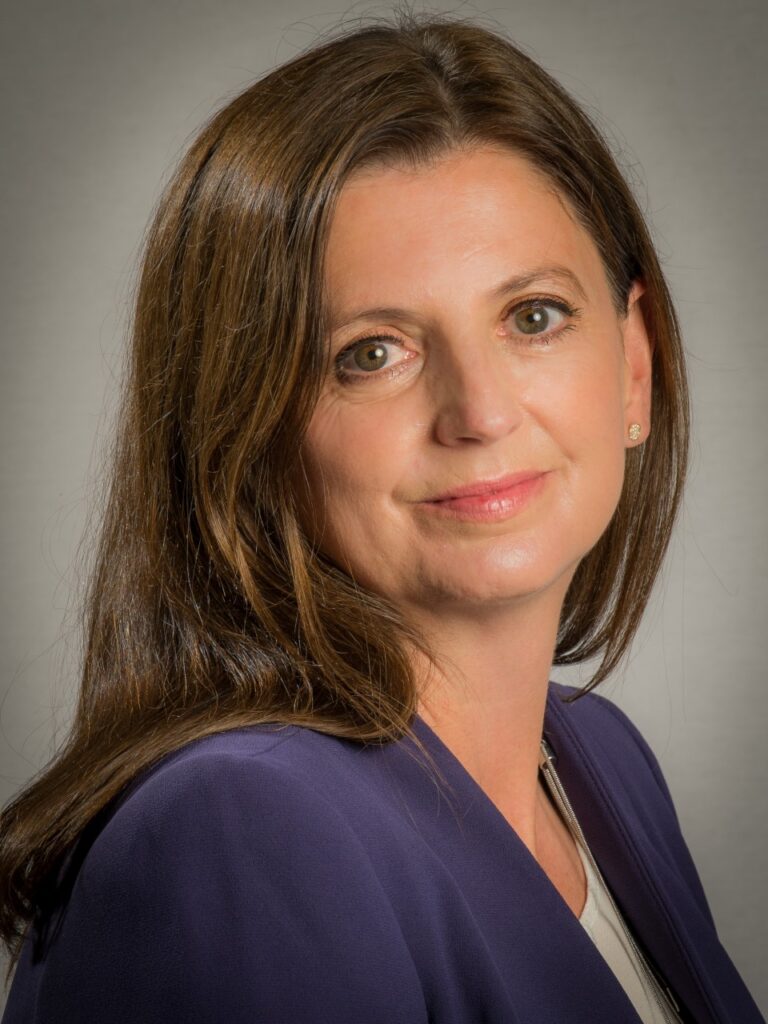
In this Q&A, Caroline shares her perspectives on the opportunities created by the European Chips Act and Ireland’s Silicon Island strategy, the importance of connecting research leadership with commercial impact, and the role Tyndall can play in strengthening Ireland’s semiconductor ecosystem. She also reflects on the importance of attracting world-class talent, increasing female representation in senior scientific leadership, and positioning both Tyndall and Ireland as global leaders in semiconductor innovation.
How did your industry experience help shape Tyndall 2030?
My experience taught me that in order to compete on the global stage, innovation must be connected to market needs, supply chain capability, strong strategic industry partnerships and a clear pathway to commercialisation and scale. In contributing to Tyndall 2030. I brought a strong focus on the collaborative partnerships required to achieve this. Tyndall’s opportunity is not only to translate its world-class research into economic and societal impact, but also to act as a national convenor, bringing together industry, academia, public agencies and European partners to strengthen Ireland’s position within the global semiconductor value chain.
As Ireland seeks to build on the opportunities created by initiatives such as the European Chips Act and Silicon Island, Tyndall has a critical role to play. By connecting research leadership with industry needs, talent development and innovation ecosystems, it enables Ireland to build semiconductor capability at scale, supporting national and European ambitions in technology sovereignty, skills development and innovation-led enterprise growth.
Realising these ambitions will require access to the broadest possible talent pool. Throughout my leadership career, particularly as Business Group President at Flex, I have seen how diverse teams consistently outperform by bringing a wider range of perspectives, experiences and ideas to complex challenges. That is why Tyndall 2030’s commitment to attracting a new generation of Principal Scientists, including increasing women representation at senior levels, is not simply a diversity objective. It is a strategic imperative if Tyndall and Ireland are to strengthen their position as leaders in sustainable semiconductor innovation and become a destination of choice for world-class talent.
What opportunities do you see for Tyndall to lead globally over the next decade?
I believe Tyndall has a unique opportunity to become one of Europe’s most influential semiconductor R&I organisations over the next decade. Few institutions can match its combination of world-class research, state-of-the art national infrastructure, industry engagement and proven ability to translate research leadership into real-world impact.
Beyond scientific discovery, I see an opportunity for Tyndall to play a broader leadership role by bringing together industry, academia, public agencies and European partners to help shape the future direction of semiconductor innovation. By working closely with organisations such as Research Ireland, IDA Ireland and Enterprise Ireland, it can strengthen Ireland’s influence across the global semiconductor ecosystem, helping to translate international engagement into opportunities for investment, innovation and indigenous enterprise growth.
Download Tyndall Strategic Plan 2030
Tyndall is a partnership between the Department of Further and Higher Education, Research, Innovation and Science and University College Cork.