

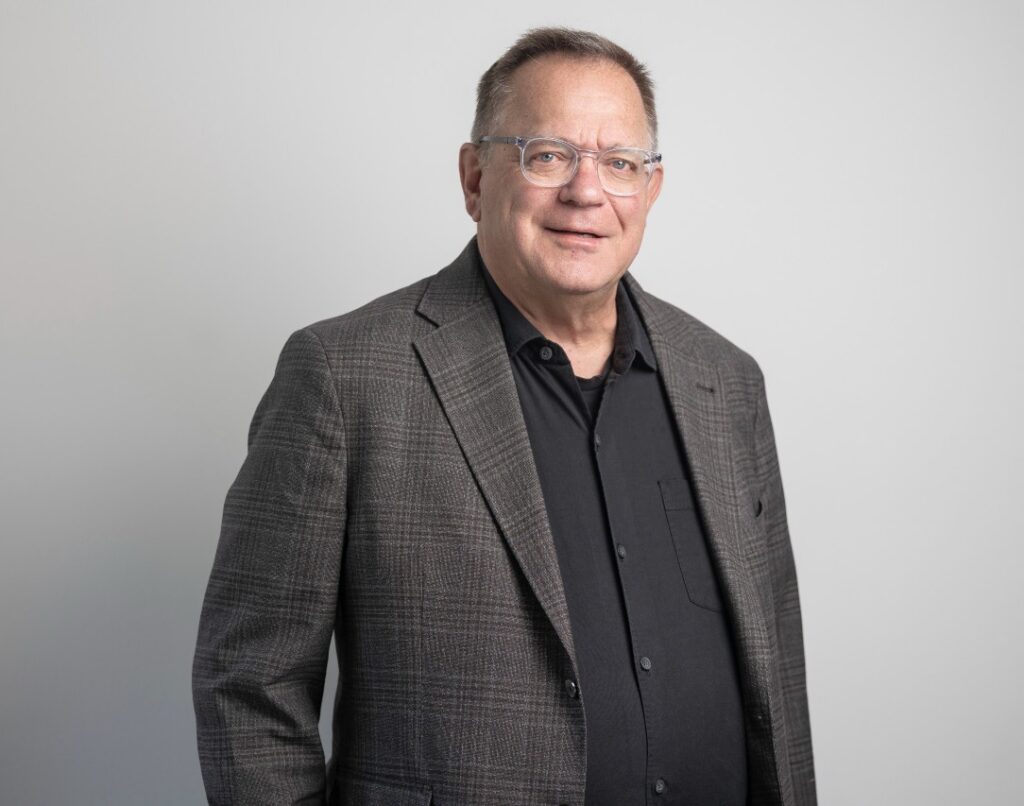
Mark Goorsky is a distinguished materials scientist and internationally recognised expert in semiconductor materials integration, wide bandgap semiconductors and advanced materials characterisation. As Professor of Materials Science and Engineering at UCLA, he has spent more than three decades advancing research at the intersection of materials science, semiconductor technology and device innovation. He previously served as Chair of the Department of Materials Science and Engineering and is also Associate Director of UCLA CHIPS.
A graduate of Northwestern University and MIT, Mark began his career as a postdoctoral researcher at IBM Thomas J. Watson Research Center before joining UCLA in 1991. His research has focused on the materials and interfaces that underpin next-generation semiconductor technologies, with particular expertise in materials integration, wafer bonding, advanced characterisation techniques and wide bandgap semiconductor systems.
Recognised for both his research leadership and commitment to education, Mark has received numerous honours throughout his career, including the Science Foundation Ireland E.T.S. Walton Award and the prestigious UCLA Distinguished Teaching Award. Through the Walton programme and subsequent collaborations, he has developed longstanding connections with Ireland’s research and innovation community and has been a valued contributor to scientific engagement between Ireland and the United States.
As a new member of the Tyndall board, Mark brings a global perspective on the scientific foundations that will enable future semiconductor and photonics innovation. His expertise helps inform Tyndall’s long-term vision as the institute advances its Tyndall 2030 ambition, strengthening Ireland’s position in emerging technologies through world-class research, talent development and international collaboration.
In this Q&A, Mark reflects on the important role of materials science in shaping future semiconductor technologies, the opportunities emerging from advanced materials integration, and how research leadership can help position Tyndall and Ireland at the forefront of international semiconductor research.
How does your experience in materials science help shape Tyndall’s future direction?
Throughout my career, I have seen how advances in materials science often serve as the foundation for technological breakthroughs. Whether in semiconductor devices, advanced communications or emerging quantum technologies, innovation ultimately depends on developing and integrating materials that unlock new levels of performance, efficiency and functionality.
That experience has given me a long-term perspective on how fundamental discoveries evolve into technologies with real-world impact. As a board member, I seek to ensure Tyndall continues investing in the scientific capabilities that will underpin future generations of semiconductor and photonic technologies, while ensuring those strengths remain aligned with industry and societal needs.
One of the aspects of Tyndall that I find particularly compelling is its ability to connect expertise across the full semiconductor value chain, from advanced materials and devices through to systems and applications. As technologies become increasingly complex, innovation will depend on bringing together capabilities that span multiple disciplines. Tyndall is uniquely positioned to connect those ideas, translating scientific leadership into technologies that deliver real-world impact. My role in Tyndall 2030 is to bring an international materials science perspective to those discussions and help ensure that Tyndall remains at the forefront of future technology development.
What opportunities do you see for Tyndall over the next decade?
The pace of change in semiconductor technology is creating significant opportunities for research institutes that can combine scientific leadership with strong industry relevance. Over the next decade, I believe Tyndall is particularly well positioned to contribute to advances in areas such as next-generation semiconductors, photonics, advanced communications and emerging quantum technologies.
One of the most exciting opportunities lies in advanced materials integration. Future semiconductor systems will increasingly rely on combining different materials, devices and technologies to achieve capabilities that cannot be delivered by a single platform alone. Tyndall has developed significant expertise in semiconductor materials, photonics and heterogeneous integration which provides a strong foundation for innovation in areas ranging from high-speed communications and sensing to advanced computing and quantum technologies.
Download Tyndall Strategic Plan 2030
Tyndall is a partnership between the Department of Further and Higher Education, Research, Innovation and Science and University College Cork.